How the campaign is structured
The store’s sentence is the whole design: “Every level is a new map with its own flood to hold back.” There is no single arena with escalating waves; each level is a different terrain puzzle, and the flood comes with it.
The level select in the trailer shows numbered maps with thumbnail previews. The trailer cuts to a Level 10 snow map, which is where the ten-level count comes from. The campaign count is not printed on the store page, so treat ten as the supported number, not a promise about DLC.
What the maps look like
From the official screenshots and trailer, the map types include:
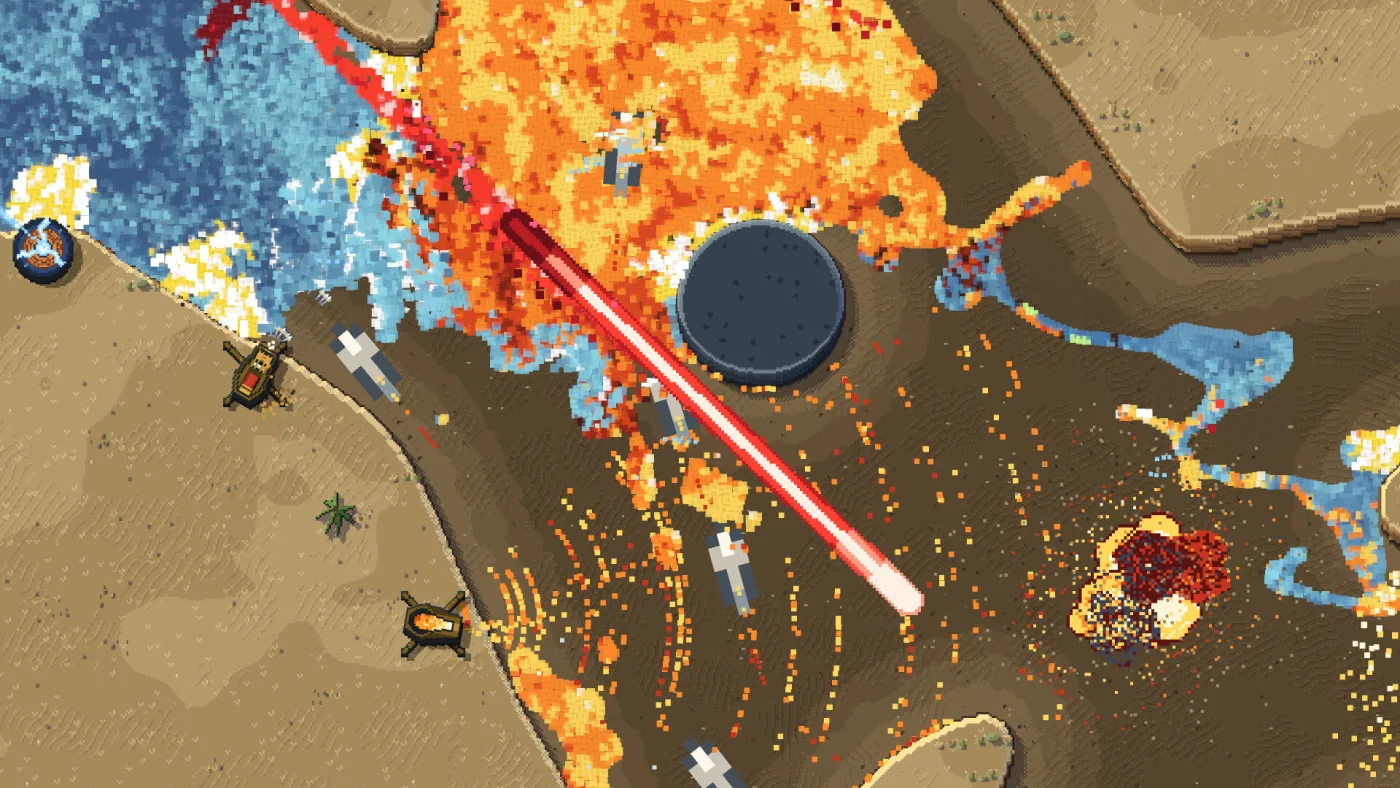
- River deltas and canyons — a main channel with banks that erode and islands that shrink.
- Island fields — separated green islands with water threading between them; forward positions are temporary.
- Volcanic / lava maps — a lava flow instead of water; players report it is easier than the base map.
- Snow — the Level 10 map in the trailer is white with cut channels and two bases.
What we do not have: level names, a per-level theme list, or the unlock conditions for later levels. Numbering them ourselves would be inventing content.
Challenge mode
Challenge mode is the difficulty answer. The base levels are easy once you find the flame-plus-fan entrance; challenge mode is not.
Player reports:
- “Try challenge mode for the level than you have harder difficulty.”
- “It took me several tries before I could beat them.”
- “The second level still got me some headache before I could finish it, and then with challenge mode… oh boy.”
What we know: it is per level, it is harder, and it is reported in the demo. What we do not know: whether it changes the flood, the economy, the map or all three.
Horde mode
Horde mode is the heavier-surge variant. The clearest report:
“Took me a while, and a lot of cannon and shotgun using!! (and damage dealing) to beat level 2 horde mode, even with 2 fire turrets spawncamping a lot of the level. Horde is very hard!”
That quote is useful for two reasons: it confirms horde mode exists in the demo, and it shows the flame camp is not enough there. Bring splash and single-target damage, not just fire.
A map-by-map approach
Since we cannot name the levels, here is how to read a new map in the first minute:
- Find the inflow. Where the flood enters is where the level’s pressure starts.
- Find the lowest channel. Water takes it; that is the first kill zone.
- Check the bank. If the kill zone’s bank is soft, plan a fallback position now.
- Check the base approach. The last 20% of the path decides whether a leak is survivable.
- Pick two turret roles, not seven. A damage turret and a control turret cover most maps; the rest is economy.
For the turret choices, see best turrets. For the erosion rules, see water mechanics.
Demo vs campaign
The demo includes early levels plus challenge and horde attempts according to players. It does not confirm the later maps: the lava level is reported, the snow Level 10 is only in the trailer, and the launch build may add or reorder maps.
The demo guide has a checklist of what to test, including one challenge run and one horde attempt.
What we still do not know
- The official level count (ten is inferred from Level 10).
- Level names and themes.
- Whether challenge and horde modes are available from the start or unlocked.
- Whether there are endless, daily or custom modes.
- How long the campaign takes to finish.
We update this page after launch from the level select and patch notes.